Hong Kong banks score just 2.3 out of 10 on quantum preparedness, says report

Hong Kong’s banking sector has a long way to go in preparing for the cybersecurity implications of quantum computing, with most institutions yet to develop comprehensive plans for the transition to quantum-resistant encryption. That is according to a new report by the Hong Kong Monetary Authority in collaboration with KPMG and Quinlan & Associates.
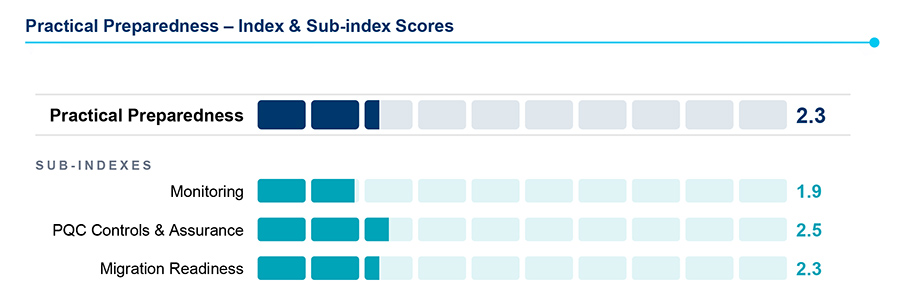
The report finds that, while awareness of quantum computing and its potential risks is growing, practical readiness remains limited. The sector recorded an average score of just 2.3 out of 10 on the Quantum Preparedness Index (QPI), which was developed by the authors and assesses institutions across four dimensions: awareness, planning, pilots and practical preparedness.
Around 68% of banks surveyed have developed some awareness of quantum-related risks or progressed towards planning and pilot activities. However, the remaining 32% have yet to begin their transition, while approximately half of participating institutions still lack a formal post-quantum cryptography (PQC) plan.
The findings point to a significant gap between recognising the strategic importance of quantum computing and taking concrete steps to prepare for its – impactful but also risky – implications.
A cybersecurity challenge with a growing horizon
Quantum computing presents a dual challenge for financial institutions. On the one hand, the technology could eventually unlock new capabilities in areas such as portfolio optimisation, fraud detection, financial modelling and risk analysis. On the other, sufficiently powerful quantum computers could undermine the public-key encryption systems that underpin digital banking, payment networks and financial infrastructure.
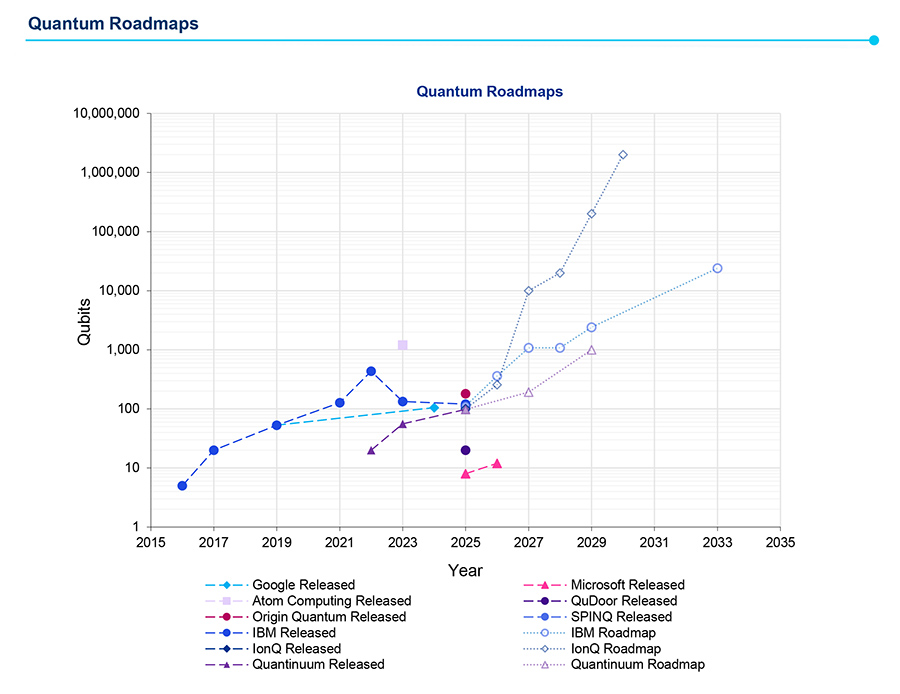
The report argues that the cybersecurity dimension deserves more immediate attention than the potential commercial applications. Although the arrival of a Cryptographically Relevant Quantum Computer (CRQC) capable of breaking today’s encryption remains uncertain, the preparations required to protect complex banking environments could take many years.
One particularly pressing concern is the so-called ‘Harvest Now, Decrypt Later’ (HNDL) threat. Under this scenario, malicious actors collect encrypted information today with the intention of decrypting it once sufficiently powerful quantum computers become available. Financial records, customer information and other sensitive data that must remain confidential for decades could therefore already be exposed to future threats.
Citing expert assessments from the Global Risk Institute, the whitepaper notes that a quantum computer capable of breaking existing cryptographic systems could reasonably emerge within the next decade and is considered likely within 15 years. The uncertainty surrounding the precise timeline, the researchers argue, should not be a reason for delaying preparations.
From awareness to practical readiness
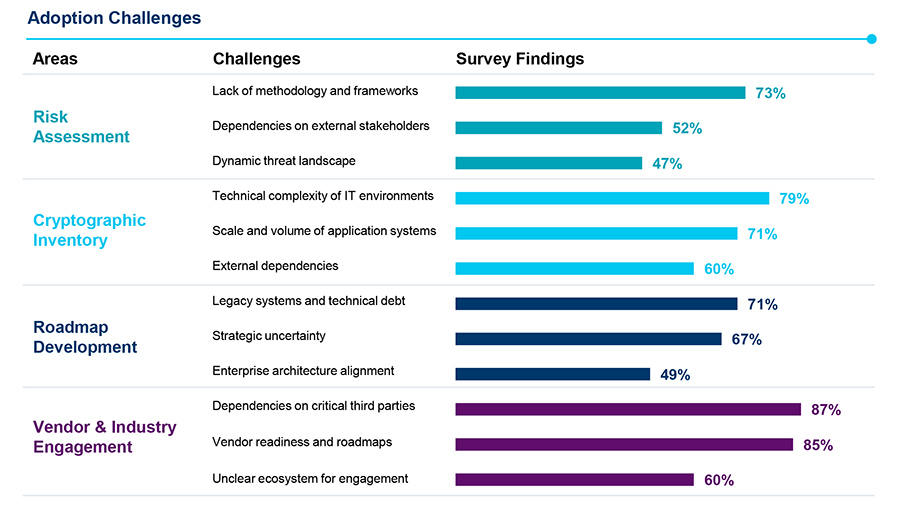
The study from the Hong Kong Monetary Authority and consultancies KPMG and Quinlan & Associates identifies several obstacles holding banks back. These include uncertainty around regulatory timelines and technical standards, limited in-house expertise, legacy infrastructure and the complexity of identifying cryptographic assets across large organisations.
Dependencies on third-party technology providers are another major challenge. Banks rely on external software vendors, cloud providers, payment networks and shared infrastructure, meaning that the transition to quantum-safe systems will require coordination across the wider financial ecosystem.
To address these challenges, the report outlines a four-stage roadmap, moving from awareness and planning to pilot programmes and practical preparedness.
A key starting point is establishing a comprehensive inventory of cryptographic assets, including encryption algorithms, keys, certificates, applications and infrastructure. Often referred to as a Cryptographic Bill of Materials (CBOM), this inventory enables institutions to identify vulnerabilities and prioritise systems protecting sensitive, long-lived information.
Banks are also encouraged to develop cryptographic agility: the ability to replace or upgrade encryption algorithms without having to redesign entire systems. This will be particularly important as post-quantum standards evolve and different cryptographic approaches need to coexist during the transition.
Early engagement with technology vendors, workforce training, dedicated governance structures and controlled pilot projects are further priorities.
HKMA targets quantum readiness by 2030
The Hong Kong Monetary Authority has committed to supporting the banking sector’s transition towards quantum readiness by 2030, building on its Fintech 2030 strategy, which identifies quantum resilience as a strategic priority.
Its planned initiatives include supervisory guidance, industry workshops, training programmes and the development of post-quantum cryptography toolkits in collaboration with academic partners, including the Hong Kong University of Science and Technology.