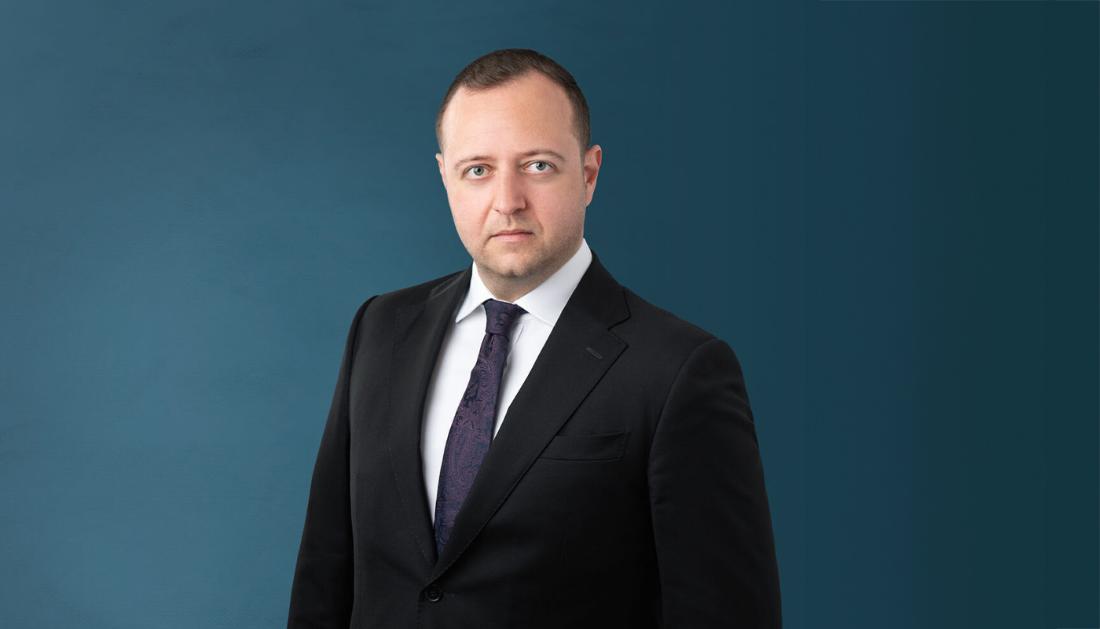
Miao Gu (Secretariat) on why judgment matters more than numbers

For Miao Gu, solving a complex problem begins with understanding what really matters. Recently promoted to Managing Director at Secretariat, he reflects on the importance of understanding the commercial reality behind the numbers and developing the judgment to know where technical analysis ends and professional insight begins.
How has your background in physics influenced the way you approach complex problems?
Physics taught me how to break a complicated problem into smaller, more manageable components and, perhaps more importantly, how to distinguish what really matters from what can safely be simplified.
That way of thinking has stayed with me. In disputes, we often deal with enormous amounts of information and many competing arguments, but the answer usually turns on a relatively small number of important issues. Being able to identify those issues and focus on them is incredibly valuable.
How do you make sure the analysis reflects commercial reality?
One lesson I learned early is to understand the commercial reality before getting lost in the numbers. A financial model can be technically sophisticated and mathematically correct, but that doesn’t necessarily mean it reflects how a business actually operates.
Before looking at the numbers in detail, I try to understand the business, what drives its economics, and what was actually happening commercially. The numbers tend to make much more sense once you understand the story behind them.
When I’m dealing with a particularly complex problem, I usually start by asking what economic question ultimately needs to be answered and then work backwards from there.
In a disputes context, that means understanding the parties’ businesses and how they make money, understanding the alleged loss, and identifying the relatively small number of assumptions that really drive the outcome. I then test those assumptions against the contemporaneous evidence. That framework helps me stay focused on the issues that can affect the answer rather than getting distracted by complexity for its own sake.
What has testifying as an expert taught you about credibility?
It has taught me that knowing your analysis is only part of the job. You need to understand it well enough to explain it simply, defend it under pressure, and be comfortable acknowledging its limitations.
Preparation obviously matters enormously, but credibility is equally important. Sometimes credibility means resisting the temptation to defend every point. If there is a limitation in your analysis or a point on which you agree with the other side, I think it is better to say so clearly. Ultimately, an expert’s role is to assist the tribunal, not to win every argument.
How do you advise clients when the answer isn’t clear-cut?
I think the key is to be clear about what you know, what you don’t know, and where judgment is required.
Where there is uncertainty, I generally prefer to explain the key assumptions and risks and, where appropriate, use scenarios or ranges rather than create a false sense of precision. But uncertainty shouldn’t prevent you from expressing a view. Clients value a clear recommendation, provided they understand what it is based on.
And part of being a trusted adviser is being prepared to challenge the preferred answer if the evidence does not support it.
What does experience teach that technical training cannot?
Judgment. Technical skills can be taught relatively quickly, but knowing what really matters takes much longer. That includes knowing when an analysis is sufficiently robust, understanding a client’s complete situation rather than simply answering the question you were given, and anticipating the next issue before someone asks you about it.
I also encourage junior colleagues to develop their own point of view. Taking ownership means being able to say, “I’ve thought about this, and this is what I think,” and then being prepared to explain why.