Japan’s competitiveness revival draws global investors, says Roland Berger

Japan is undergoing a major structural transformation that is redefining its place in the global economy, according to a report by Roland Berger, which found that the Japanese economy has been regaining its competitiveness thanks to a focus in areas like upstream technology and semiconductor materials.
The world’s third-largest economy is moving past a long-standing pattern of stagnation and entering a period of economic renewal. This shift is being driven by the return of inflation, steady wage growth, and corporate governance reforms that are reshaping business behavior across the country.
Japan once offered a new vision of economic and social development to the world with its high-growth model and success in a variety of industries. It seemed it would be the ultimate success story – but then came the collapse of the asset bubble in the early 1990s, the beginning of the end of that dream.
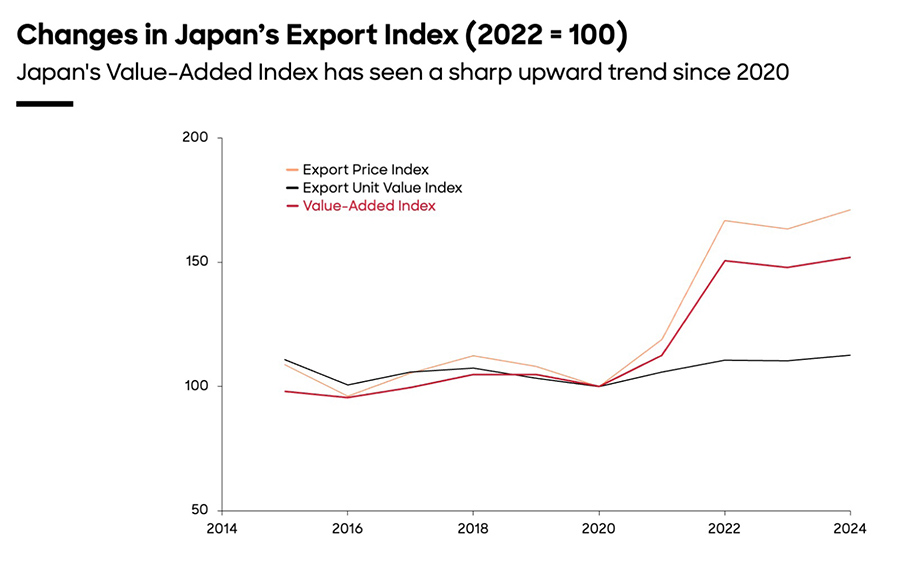
Since then, the so-called ‘lost decades’ have been marked by a shrinking population, a slipping GDP ranking, and a domestic market held hostage by persistent deflation. But now, the report notes that pattern appears to be reversing, with liquidity being restored, inflation returning, wages growing, and market governance reforms finally paying off.
This reversal of the decades-long trend of price deflation marks a key turning point for domestic and international business. Senior Partner and Head of Japan at Roland Berger, Yuzuru Joe Ohashi, notes that Japan can no longer be viewed through the lens of economic stagnation. He stated that the market is structurally re-rating, supported by strong economic fundamentals and significant untapped value.
Critical strengths driving competitiveness
Japan’s renewed economic strength rests on three main structural foundations. First, the nation maintains critical leadership in upstream technology and advanced materials. For example, Japanese companies currently control around 48% of the global supply of semiconductor materials, making the country an indispensable part of high-tech manufacturing.
Second, Japan is turning its aging population into an asset by innovating in healthcare, robotics, and services for senior citizens. Third, it provides an institutionally stable and transparent hub for companies operating across Asia.
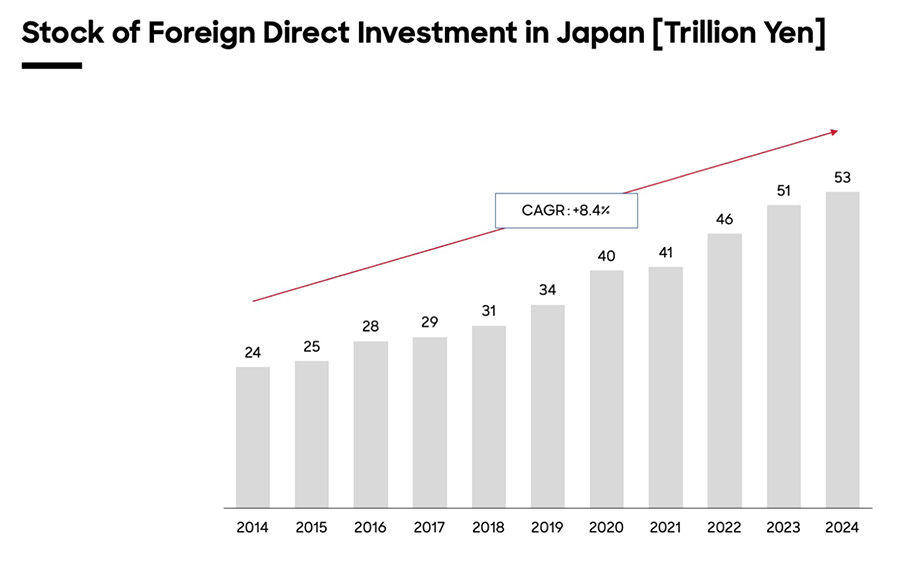
Foreign direct investment stock in Japan reached a record JPY 53 trillion in 2024, growing at a CAGR of 8.4% since 2014. This growth reflects increasing global confidence in Japanese assets. Public programs in Tokyo now offer foreign-affiliated firms unsecured financing with repayment terms up to 10 years, while corporate cash reserves stand at a record JPY 637 trillion in retained earnings.
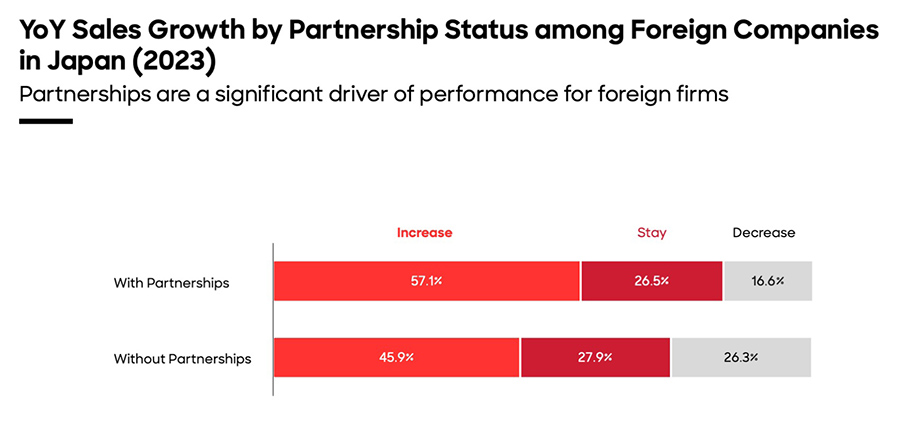
International partnerships tripled between 2014 and 2023, as foreign companies operating with active local partners achieved 57% year-on-year sales growth, outpacing isolated entrants by 11 percentage points.
Unlocking underutilized capital and assets
Despite these foundational strengths, many assets within the country remain underutilized. Small and medium enterprises with world-class capabilities frequently focus only on the domestic market, while larger corporations continue to hold large pools of cash on their balance sheets. International investors who build direct connections to these under-leveraged capabilities stand to gain substantial strategic value.
Market entry into Japan is increasingly focused on high-growth technology sectors, including sub-micron semiconductor development such as the Rapidus initiative, which aims to produce two-nanometer logic chips by 2027. This project has been backed by major government subsidies and has included international partnerships with major tech players like IBM and Belgian research hub imec.
Foreign firms are also leveraging domestic expertise in advanced robotics, nursing care systems, and digital transformations across traditional industries. Cross-border corporate acquisitions allow international investors to combine local research with global marketing channels, effectively revitalizing dormant technical assets.
Challenges entering the market
To capitalize on this transformation, the report encourages foreign businesses to move beyond basic entry strategies and establish active partnerships or pursue targeted acquisitions. As global markets face rising uncertainty, Japan offers a unique blend of technological depth and regulatory predictability.
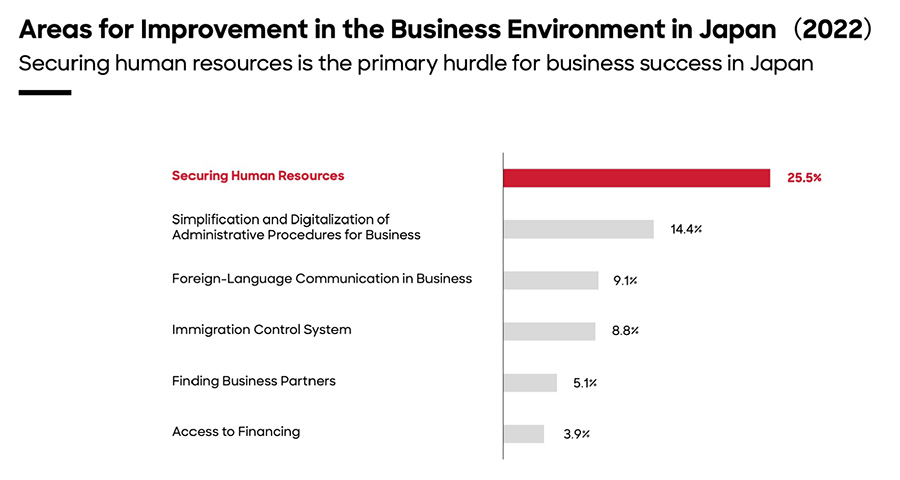
One notable challenge for foreign-affiliated companies in Japan is securing human resources. This is not because of an overall lack of local skill, but is rather a reflection of a major misalignment between Western job-based models and Japan’s people-centered employment logic, the report notes.
For this reason, global firms are more successful when they avoid simply importing Western HR systems. Instead, they adapt their evaluation models to recognize seniority and process contribution alongside direct output. This alignment with local values is critical for maintaining long-term organizational stability.
Ultimately, the report advocates for a new outlook on the island nation – not as a stagnant, closed market, but as a vital economic engine capable of connecting specialized local mastery with global scale. International leaders who learn to navigate these deep-seated workplace norms stand to capture a quiet powerhouse that offers both long-term stability and unmatched technical depth.
“Japan still offers multiple markets at the forefront of global trends and a deep bench of resilient, highly capable players,” said Ohashi. “The strategic value of taking initiative in an undervalued market is substantial, and excluding Japan from a portfolio may translate directly into missed future opportunities.”